Pest control services Tucson homeowners rely on establish engineered physical and liquid barriers around exterior foundations to stop native venomous arthropods and destructive rodents before interior access occurs. Standard desert treatments focus on the exterior envelope, eliminating the food web that attracts Arizona bark scorpions and black widows to indoor rooms.
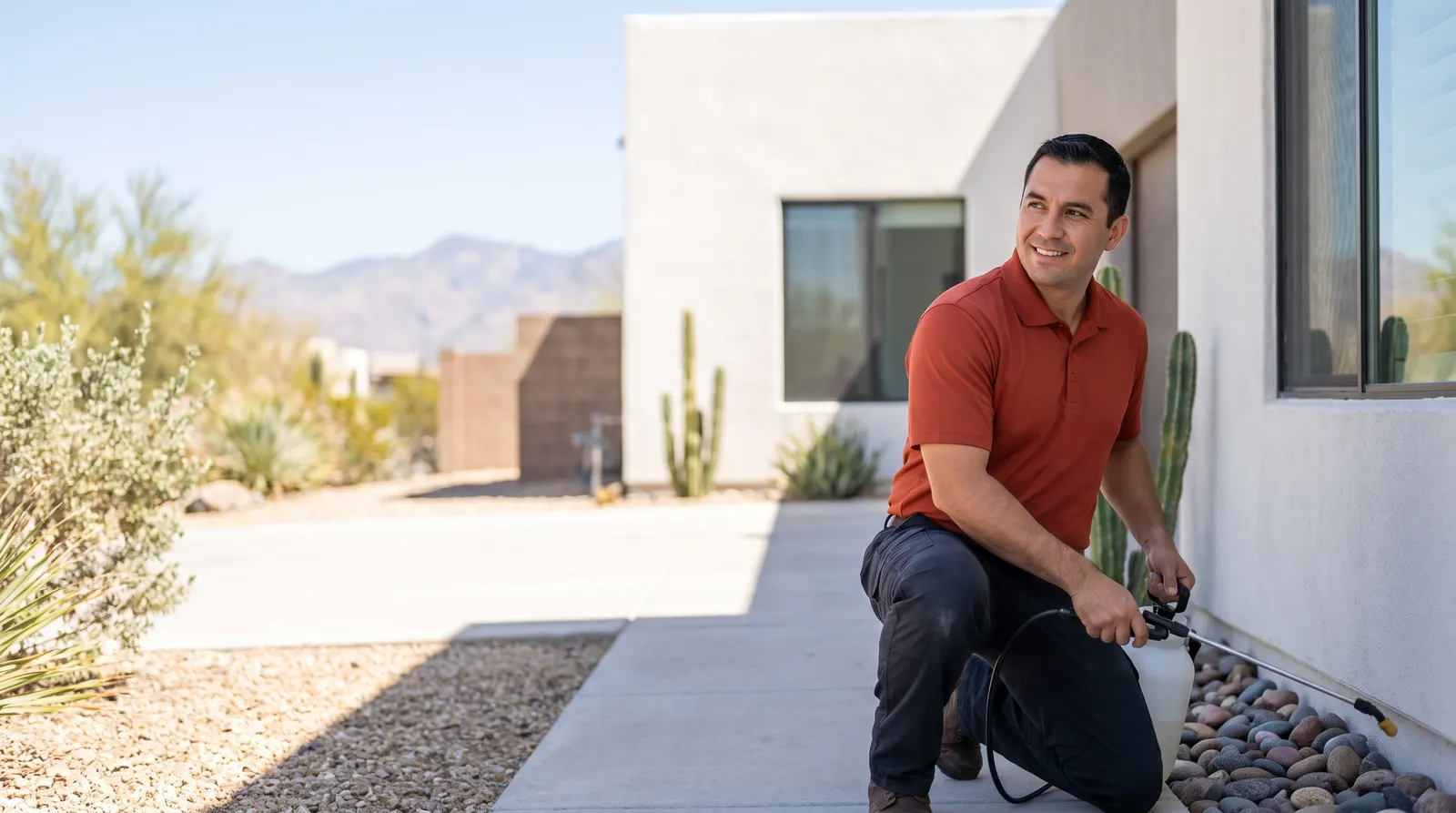
Pest control services company in Tucson is a specialized structural defense operation that inspects, excludes, and eliminates native Sonoran Desert pests from residential and commercial foundations across Pima County.
Every service reflects the same meticulous attention to detail, whether it's a single job or a larger pest control services project across Tucson.
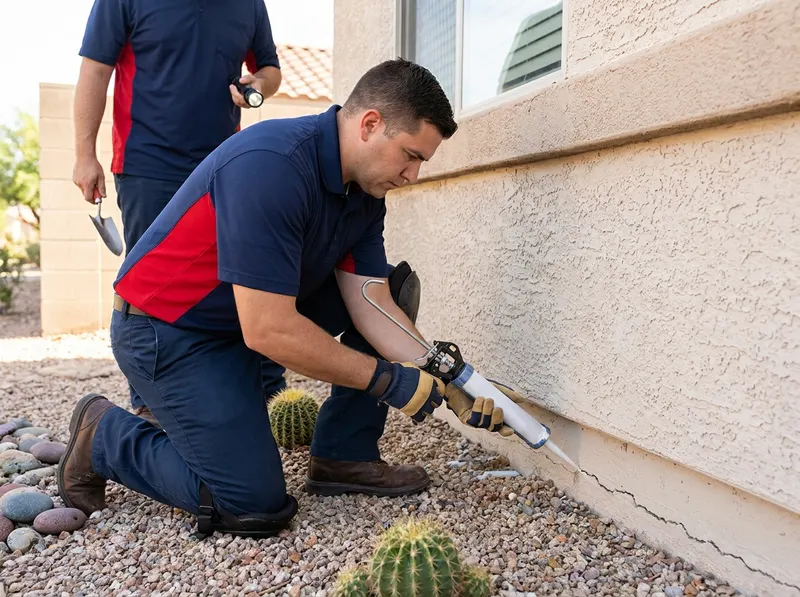
Focuses on exterior foundation masonry, weep screeds, and expansion joints where Arizona bark scorpions (Centruroides sculpturatus) enter residential structures. Technicians seal structural gaps larger than one-sixteenth of an inch using silicone elastomeric sealants, apply exterior microencapsulated non-repellent residual compounds along stem walls, and systematically eliminate cricket and roach populations that sustain predatory scorpions. The protective protocol inspects structural interfaces where stucco weep screeds meet foundation footings, sealing hairline voids that allow bark scorpions to flatten their exoskeletons and slip into conditioned wall spaces. Exterior perimeter treatments extend three feet up exterior foundation walls and three feet outward across surrounding gravel or soil beds to create a hostile chemical boundary that binds directly to hot desert hardscapes. Nighttime ultraviolet blacklight field audits locate active nesting aggregations along exterior boundary mortar lines, block wall joints, and landscape rock clusters. Technicians dust deep masonry voids using specialized pneumatic micro-dusters loaded with mineral desiccant dusts, dehydrating harboring scorpions within unsealed wall cavities without dispersing chemical vapors into indoor living areas.
Get a quote →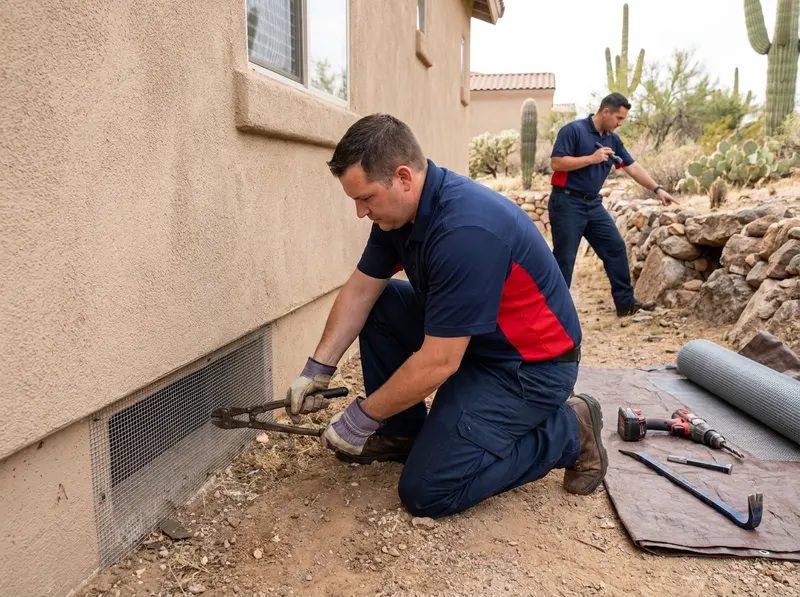
Targets white-throated woodrats (Neotoma albigula) nesting inside HVAC line sets, pool equipment enclosures, low-voltage landscape lighting, and engine bays. Work involves physical excavation of cactus-needle middens, sanitization of pheromone-marked nesting chambers, and mechanical fortification using 19-gauge quarter-inch hot-dipped galvanized mesh fastened over exterior entry cavities. Technicians mechanically extract complex nesting mounds containing thousands of cholla cactus joints, desert debris, and structural trash that pack rats assemble to protect themselves against predatory coyotes, snakes, and raptors. Once middens are cleared, nesting voids receive an enzyme-based neutralizer to eliminate concentrated pheromone trails that otherwise draw outside transient woodrats to reoccupy identical nest hubs. Specialized physical screening protects vulnerable HVAC line sets, copper refrigerant piping, exterior electrical subpanels, and low-voltage lighting hubs using industrial metal screws and galvanized fasteners. Heavy-gauge metal perimeter flashing is shaped to fit tight mechanical chases under pool pump pads and vehicle storage sheds, preventing persistent chewing damage to sensitive wiring assemblies, engine wiring harnesses, and high-voltage circuit lines.
Get a quote →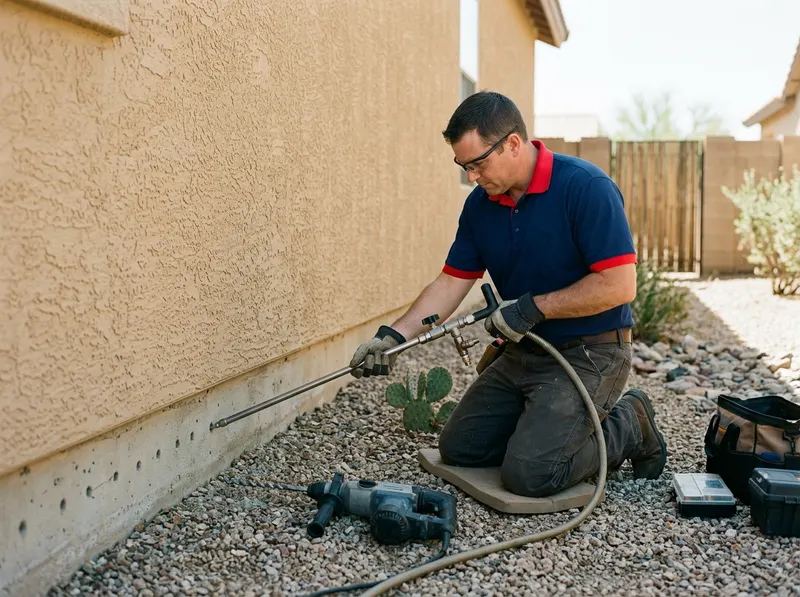
Addresses desert subterranean termites (Heterotermes aureus) constructing exploratory mud shelter tubes across masonry stems, stem walls, and plumbing penetrations. Service consists of trenching perimeter soil four to six inches deep against foundations, precision rodding expansion joints, and applying non-repellent liquid termiticide to establish an uninterrupted subterranean defense zone. Technicians excavate continuous perimeter soil trenches measuring four inches wide and six inches deep directly against stem-wall concrete footings, saturating soil beds with non-repellent termiticide solutions at an application volume of four gallons per ten linear feet. Expansion joints along garage slabs, front entry steps, and rear covered patios undergo precision drilling using diamond-tipped masonry bits spaced at ten- to twelve-inch intervals, ensuring deep sub-slab termiticide dispersion into critical soil zones where utility conduits breach structural concrete. Non-repellent active ingredients allow foraging termites to move through the treated soil matrix undetected, picking up microscopic chemical crystals and transferring the slow-acting compound throughout underground colony chambers through communal grooming and food sharing. This process systematically eliminates deep subterranean colonies within sixty to ninety days while establishing an unbroken defensive perimeter around concrete footings.
Get a quote →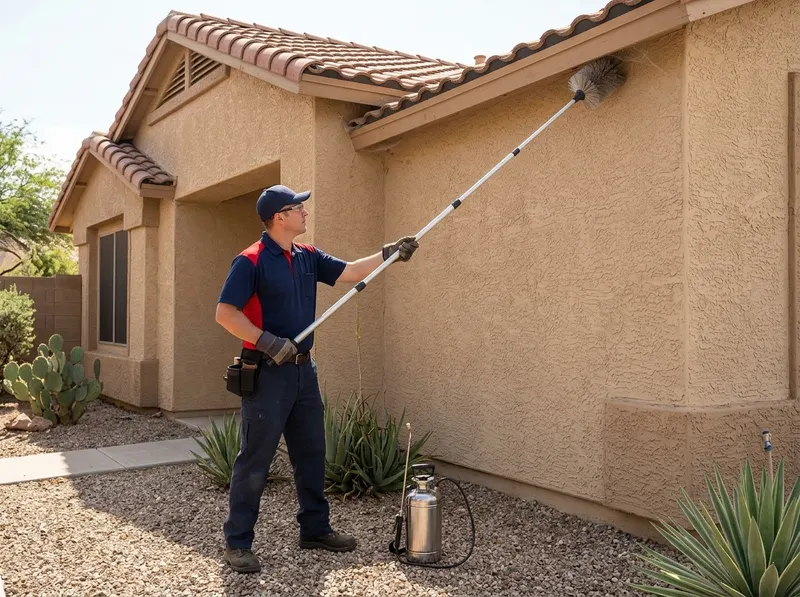
Eliminates western black widows (Latrodectus hesperus) and desert recluse species occupying irrigation valve boxes, block-wall weep holes, storage sheds, and garage perimeters. Technicians remove active web clusters with mechanical electrostatic brushes, treat deep crevice voids with specialized dust formulations, and place targeted residual bands along foundation-to-soil boundaries. Western black widows construct irregular, high-tensile cobwebs across shaded low-level surfaces, ground-level exterior utility boxes, decorative landscape boulders, and structural stucco overhangs. Protective technicians physically sweep active spider webbing using specialized electrostatic telescoping poles, collecting egg sacs containing hundreds of developing spiderlings to prevent seasonal population surges. Shaded irrigation valve boxes, sprinkler solenoid manifolds, and crawlspace perimeter access hatches receive direct targeted treatments using moisture-resistant micro-dusts that settle into dark recesses where venomous spiders shelter. Exterior perimeter liquid treatments apply wide-coverage residual barriers across garage door thresholds, exterior storage sheds, and structural footing perimeters, eliminating the surrounding prey base of beetles, crickets, and moths to systematically starve arachnid populations.
Get a quote →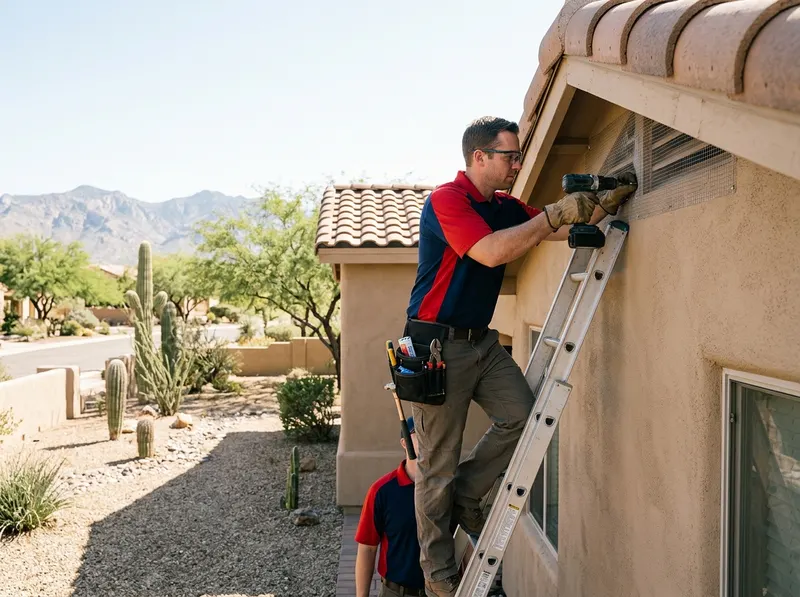
Secures upper building envelopes against citrus-fed roof rats (Rattus rattus) utilizing mature fruit trees, bougainvillea, and utility lines to access attic vents and tile roofs. The process involves comprehensive sealing of dormer returns, fascia intersections, and ridge caps, followed by an interior snap-trapping protocol to capture active populations without the use of dangerous attic poisons. Roof rats utilize exterior vertical climbing surfaces, mature palm fronds, unpruned citrus canopies, and overhead utility lines to gain access to barrel tile roofs, soffit vents, and attic dormer eaves. Technicians conduct complete aerial roof inspections to identify entry points, gnawed lead pipe jacks, and unsealed tile intersections along fascia edges. Entry points exceeding one-quarter inch are mechanically sealed using nineteen-gauge galvanized steel mesh, expanding structural foam, and heavy sheet-metal flashing tailored to match building architecture. Interior attic eradication relies strictly on high-density commercial wooden snap traps placed strategically along primary rat runways, roof joists, and thermal insulation trails. Technicians avoid rodenticide baits inside structural attics, preventing rodent mortality inside inaccessible wall framing voids and eliminating the risk of decomposition odors or secondary poisoning to domestic pets.
Get a quote →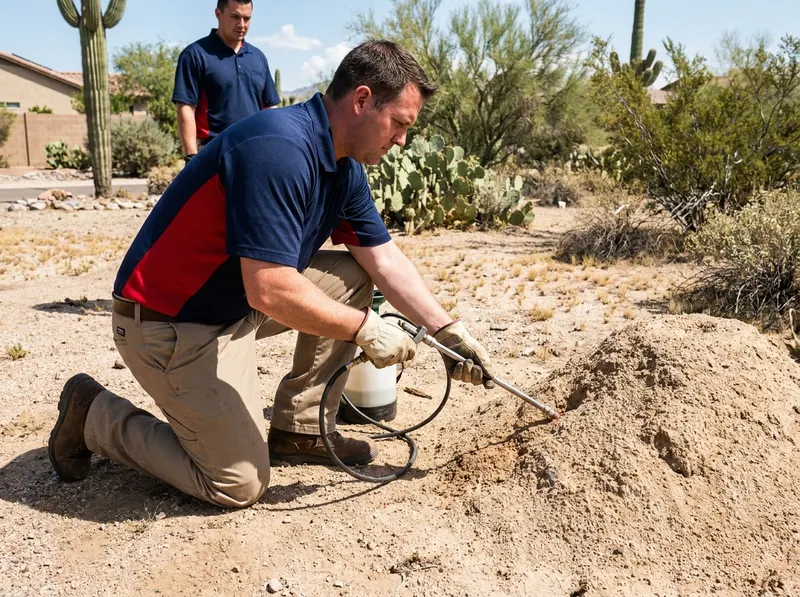
Neutralizes native southern fire ants (Solenopsis xyloni) and harvester ants (Pogonomyrmex) excavating extensive sub-surface colonies across driveways, paver patios, and turf boundaries. Treatment uses specialized broadcast biological growth regulators alongside direct non-repellent drenching of active nest hubs to eliminate deep subterranean reproductive queens. Native desert fire ants establish aggressive colonies beneath flagstone patios, driveway expansion seams, and decorative decomposed granite beds, posing painful sting hazards to children and pets. Technicians identify foraging routes and subterranean colony boundaries to deploy specialized micro-granule insect growth regulators, which foraging worker ants mistake for protein sources and carry directly into subterranean nests to feed reproductive queens. Active central mound craters undergo localized non-repellent liquid drenching using low-pressure tank rigs to penetrate deep desert soil shafts down two to three feet without triggering emergency colony relocation or defensive bud-nest scattering. Exterior building stem walls receive a wide-swath liquid barrier application to keep foraging ant trails from breaching door thresholds, kitchen water supplies, or interior bathroom plumbing fixtures.
Get a quote →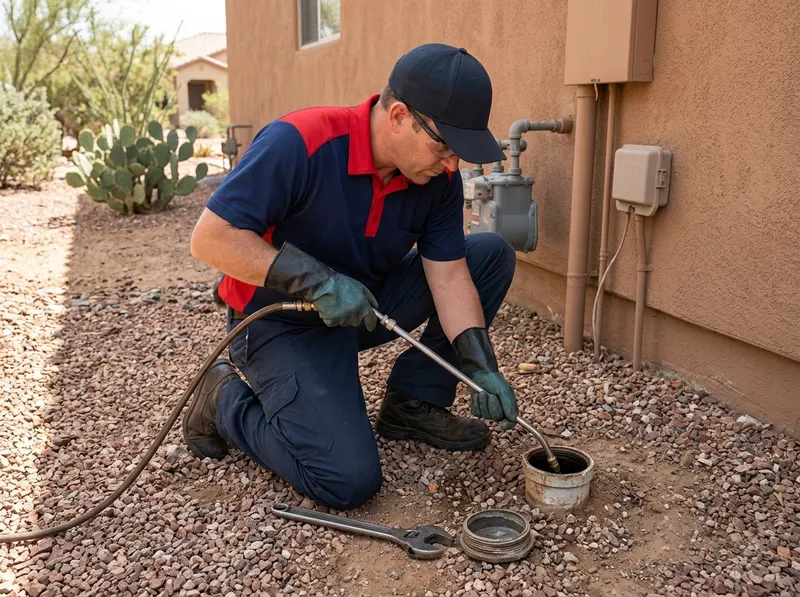
Mitigates American and Turkestan cockroaches surging from municipal sewer infrastructure into residential drain systems and exterior yard cleanouts during hot summer months. Technicians inject residual foam formulations directly into drain trap voids, treat plumbing chase walls, and seal exterior perimeter inspection covers to establish a physical and chemical insect barrier. During extreme summer temperature surges, municipal sewer mains experience severe heat pressure, driving thousands of American and Turkestan cockroaches up through subterranean plumbing lines, exterior sewer cleanouts, and dry p-traps. Technicians inspect exterior drainage hubs, landscape cleanout caps, and decorative rock beds adjacent to plumbing stacks, checking for loose threaded plugs and cracked PVC caps. Specialized expanding chemical foam formulations are injected directly into exterior utility chases and cleanout access shafts, coating interior pipe perimeters with thick residual insect growth regulators and knockdown agents without disrupting residential drainage flow. Exterior stem-wall boundaries and plumbing penetration boots along exterior laundry connections receive heavy-duty non-repellent liquid applications to intercept roaming roaches before they access living areas.
Get a quote →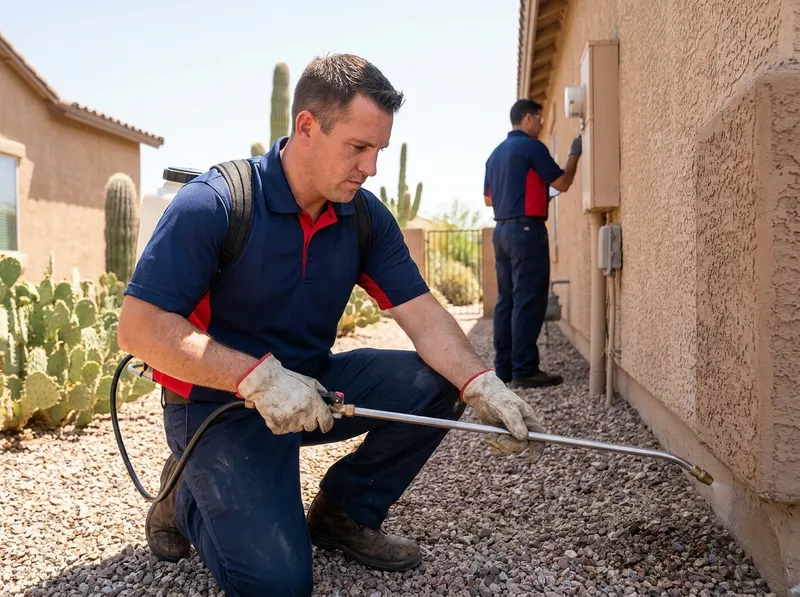
Maintains an active chemical and structural shield around residential boundaries with bi-monthly perimeter applications tailored to seasonal Sonoran Desert insect surges. Service establishes continuous 3-foot-up and 3-foot-out foundation defense bands, monitors exterior rodent stations, and re-treats critical irrigation boxes and foundation expansion gaps. Desert maintenance services adjust chemical formulations throughout the calendar year to address predictable shifts in Sonoran insect biology, matching early spring scorpion awakenings, summer monsoon cricket hatches, and autumn rodent migrations. Every scheduled maintenance visit includes a detailed walk of exterior foundation stem walls, sweeping away fresh spider webbing and insect carapaces while monitoring exterior tamper-resistant rodent mitigation stations. Technicians treat perimeter gravel rock boundaries, exterior irrigation manifolds, and concrete expansion lines using microencapsulated liquid compounds that remain biologically stable across extreme desert UV radiation and surface heat. Property owners receive an on-site inspection summary detailing newly discovered exterior structural vulnerabilities, perimeter vegetation contact points, and landscape water leaks that require correction to maintain a pest-free residential envelope.
Get a quote →You get a firm, itemized quote for your pest control services before any work begins, no surprises, no pressure.
Careful prep, tidy work, and a full cleanup when we are done. We treat your home and belongings like our own.
The same trusted, background-checked team from the first call to the final check.
If a residence experiences venomous pests inside sleeping areas or perimeter stem walls, choose comprehensive exterior perimeter defense and mechanical exclusion sealing; if an attic or HVAC exterior chase displays chew damage and nesting debris, choose specialized rodent trapping and hardware-cloth wire mitigation. The trade-off is focused structural fortification versus continuous biological food-web eradication, balancing targeted physical wire defense against whole-lot perimeter insect control. Homeowners facing sudden bark scorpion sightings in bedroom baseboards or nursery closets require an exterior-focused physical envelope defense.
This process involves filling weep screed gaps larger than one-sixteenth of an inch with breathable metallic mesh or elastomeric silicone, combined with a continuous three-foot vertical foundation chemical spray. This protocol cuts off the mechanical entry points into framing wall cavities and deprives scorpions of their primary prey species, including desert crickets and field roaches. When exterior air conditioning compressor line sets, pool pump electrical chases, or vehicle engine compartments show signs of nested cholla cactus buttons and severed electrical wire harnesses, the property requires physical hardware cloth fortification, comprehensive midden excavation, and targeted humane mechanical trapping.
Installing hardware cloth stops rodent access immediately, but does not prevent desert crickets, harvester ants, or subterranean termites from colonizing perimeter soil zones. Conversely, an exterior chemical barrier neutralizes predatory insects and stops foraging termites before structural wood timbers suffer damage, yet chemical bands cannot prevent a thirteen-ounce woodrat from chewing through an unshielded flexible conduit. Property owners balance immediate physical exclusion for localized mechanical vulnerabilities against continuous microencapsulated chemical perimeters that protect the full residential envelope across extreme Sonoran Desert temperature shifts.
Every project gets a firm, written price after a free on-site visit. Ranges below for orientation.
Tell us about your pest control services job and we'll send a clear, written quote, usually the same day. Or just call and talk to a real Tucson pro.
(520) 505-7659
Properties bordering the open desert washes of Sabino Canyon Recreation Area, Tucson Mountain Park, and Saguaro National Park experience heightened migration of Arizona bark scorpions and pack rats as summer monsoons flood natural burrows. Historic adobe structures across Barrio Viejo and Armory Park face unique subterranean termite penetrations through unsealed mud-brick footings, requiring trenching methods that protect historic masonry. Central properties near the University of Arizona and Reid Park feature dense citrus canopies that sustain heavy roof rat activity along utility right-of-ways. Homes situated in the foothills of the Santa Catalina Mountains, along East Tanque Verde Road and Skyline Drive, contend with rocky terrain and decomposed granite soil that allow Arizona bark scorpions and black widows to shelter inches away from exterior structural footings. In suburban planned communities like Civano, narrow zero-lot-line easements and dense decorative native landscaping create humid microclimates around drip irrigation zones, accelerating Turkestan cockroach reproduction and southern fire ant expansion. Properties situated across West Speedway Boulevard toward Tucson Mountain Park sit near deep alluvial washes that channel large volumes of pack rats into attached garages, outdoor barbecue islands, and pool mechanical closets. Technicians inspecting properties throughout Pima County calibrate foundation chemical concentrations and mechanical exclusion materials to match these precise micro-environments, ensuring barrier treatments withstand both intense Sonoran UV radiation and sudden desert monsoon flash runoff.
Free estimates for Tucson & the surrounding area.
 Brezora Pest Defense