Concrete stem wall construction across Pima County creates specialized vulnerability zones where desert subterranean termites exploit cold joints between structural footings and foundation slabs. In neighborhoods like…
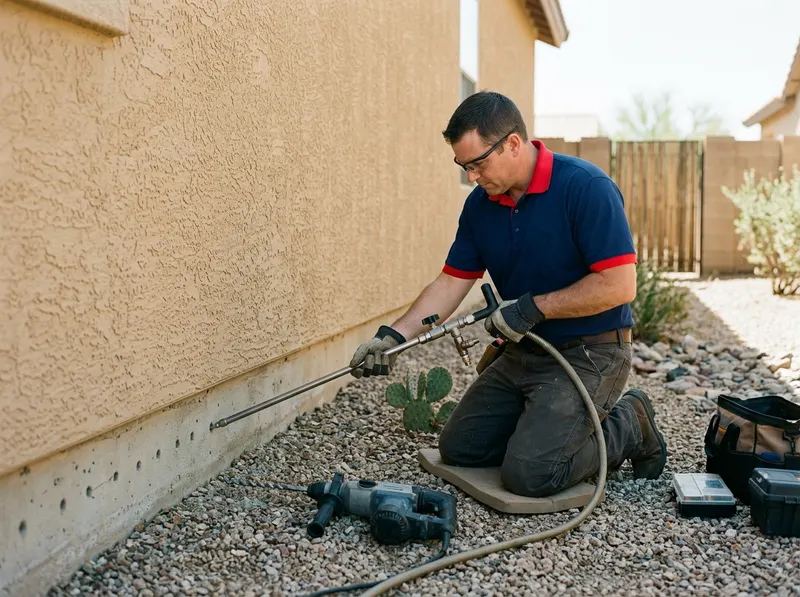
Concrete stem wall construction across Pima County creates specialized vulnerability zones where desert subterranean termites exploit cold joints between structural footings and foundation slabs. In neighborhoods like Sam Hughes, Blenman-Elm, and Barrio Viejo, aging stem wall foundations settle, producing micro-fissures narrower than 1/32 of an inch. Heterotermes aureus utilizes these subterranean channels to construct protective earthen shelter tubes, moving directly from caliche soil layers into wall framing without surface exposure. A localized spot treatment leaves untreated concrete joints open to colony redistribution. Complete stem wall defense saturates soil 6 inches wide and 6 inches deep around the foundation, introducing a non-repellent liquid agent that foraging termites unknowingly transport back to subterranean nesting galleries.
Foundation construction dictates specific barrier mechanics across different Tucson microclimates. Desert homes in Catalina Foothills and Midtown often incorporate split-level concrete stem walls built directly against solid rock or decomposed granite, requiring precision masonry drilling every 12 inches through attached patio slabs, stone veneers, and garage aprons. In sustainable development designs throughout Civano and Rincon Heights, plumbing penetrations passing through post-tension stem walls require deep-rod termiticide application down to footings. Properties in historic areas such as El Presidio, Dunbar Spring, and Armory Park frequently feature mixed rubble, adobe, and concrete additions where foundation depths vary substantially within a single exterior perimeter.
Homeowners selecting between perimeter liquid stem wall barriers and exterior bait station installations face clear structural trade-offs. Liquid stem wall treatments provide an immediate, continuous soil saturation zone that neutralizes foraging workers attempting physical wall crossing within hours of application, whereas baiting systems require active subterranean termite discovery, ingestion, and colony dissemination cycles that often span several months during hyper-arid desert dry spells. Liquid stem wall applications require trenching along soil lines and temporary drilling through exterior flatwork, whereas bait stations sit flush in turf or gravel without penetrating adjacent concrete. Properties with monolithic slabs encounter fewer expansion seams, whereas standard stem walls require complete mechanical perimeter coverage to prevent undetected interior entry beneath floorboards.
Every job gets a firm, written price after a free on-site visit.
Tell us about your subterranean termite stem wall treatments job in Tucson and we'll send a clear, written quote, usually the same day.
 Brezora Pest Defense