American cockroaches live primarily in municipal utility conduits, main sewer mains, and private septic lines across Pima County. During the prolonged dry heat of May and June, followed by high-volume monsoon storms in…
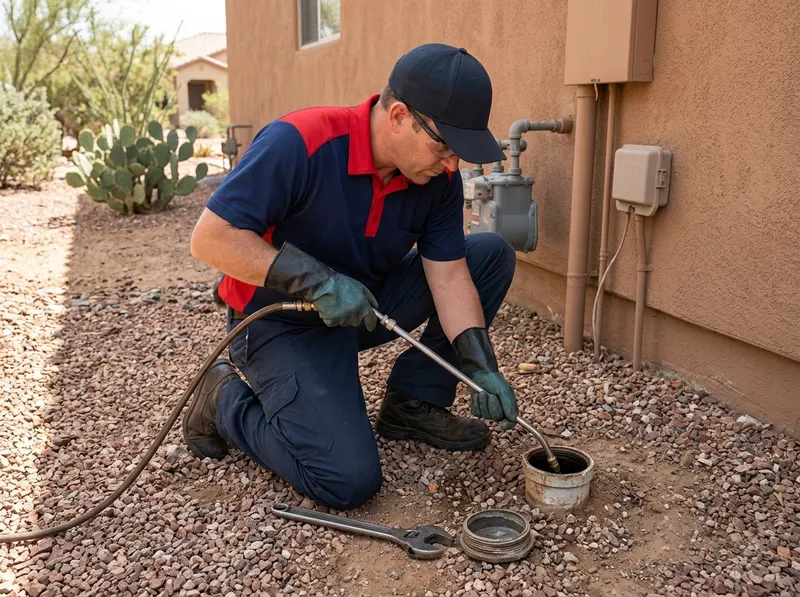
American cockroaches live primarily in municipal utility conduits, main sewer mains, and private septic lines across Pima County. During the prolonged dry heat of May and June, followed by high-volume monsoon storms in July and August, moisture shifts drive these insects upward through infrastructure lines. Standard interior chemical treatments fail because the breeding population resides below the floor slab inside municipal pipes. Effective defense requires physical hardware exclusion at external sewer cleanouts, paired with mechanical one-way valves inside seldom-used floor drains, utility sinks, and condensate pathways. If an exterior sewer cleanout cap is cracked, missing, or loosely fitted with unthreaded plastic plugs, pests bypass the home's exterior boundary entirely, emerging directly beneath baseboards or inside bathroom drain stacks.
Older Tucson communities with established clay or cast-iron sewer infrastructure, including historic masonry residences in Armory Park, El Presidio, and Barrio Viejo, experience significant sewer roach surges due to line settling and ground shifting over decades. Similarly, historic properties throughout Sam Hughes, Blenman-Elm, Dunbar Spring, and Rincon Heights frequently feature open exterior yard traps or aged roof plumbing vents that allow unchecked egress into attic and living zones. In contrast, modern developments in Civano or hillside residences across the Catalina Foothills and Midtown often contend with dry-trap evaporation in underutilized guest bathrooms or exterior irrigation cleanouts exposed to desert wash corridors. When water inside plumbing P-traps evaporates under sustained 100-plus degree Sonoran temperatures, structural barriers vanish, granting sewer pests unimpeded access to interior living spaces.
Selecting permanent physical exclusion over recurrent aerosol fogging provides sustained control without saturating living environments with broadcast airborne agents. The defensive strategy secures the exact conduit junctions: 1) inspecting all ground-level cleanout riser threads and installing heavy-duty threaded gas-tight caps; 2) fitting interior floor and utility drains with self-sealing elastomeric silicon valves that allow wastewater drainage while blocking upward insect migration; and 3) treating subterranean lateral junction lines using microencapsulated non-repellent agents that adhere to wet pipe interiors. This physical-first approach eliminates reliance on open-ended monthly service contracts, establishing long-term architectural defense against sewer-dwelling desert pests.
Every job gets a firm, written price after a free on-site visit.
Tell us about your sewer cockroach drain and cleanout defense job in Tucson and we'll send a clear, written quote, usually the same day.
 Brezora Pest Defense